🔴 UPDATE — May 20, 2026 — CUBAN INDEPENDENCE DAY: The DOJ has officially unsealed the indictment against Raúl Castro today in Miami — charging him with seven federal crimes including four counts of murder. Acting Attorney General Todd Blanche made the announcement at a ceremony held at Miami’s Freedom Tower, the historic landmark that served for decades as a refugee processing center for Cuban exiles. The Cuban exile community has erupted in celebration across Miami. For the full breaking update click here → Justice, 30 Years Late: The Raúl Castro Indictment Is Now Official
BREAKING — Published May 16, 2026 By Roe Baynes · 4 Min Read
DOJ Moves to Indict Raúl Castro Over 1996 Brothers to the Rescue Shootdown
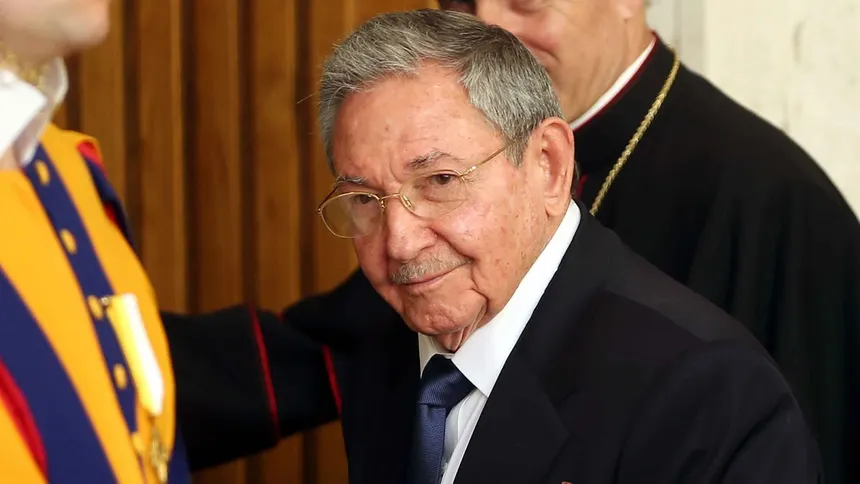
The U.S. Department of Justice is preparing a criminal indictment against former Cuban President Raúl Castro, 94, in connection with the February 24, 1996 shootdown of two unarmed civilian aircraft operated by the Miami-based exile group Brothers to the Rescue, according to two U.S. officials familiar with the matter. The move, first reported Thursday by NBC News and confirmed by multiple outlets, would mark the most aggressive U.S. legal action ever taken against a sitting or former Castro-era leader.
The 1996 Attack
On February 24, 1996, a Cuban Air Force MiG-29UB fired air-to-air missiles at two unarmed Cessna 337 Skymasters flown by Brothers to the Rescue, a humanitarian group that searched the Florida Straits for Cuban rafters and occasionally dropped pro-democracy leaflets near the island. All four Americans aboard were killed: Carlos Costa (29), Armando Alejandre Jr. (45), Mario de la Peña (24), and Pablo Morales (29). A third aircraft, piloted by group founder José Basulto, escaped. Both downed planes were struck in international airspace, 18 and 30.5 nautical miles north of Cuba’s territorial limit, as later confirmed by ICAO radar data. The UN Security Council passed Resolution 1067 condemning the attack, and the Helms-Burton Act codifying the U.S. embargo was signed into law just over two weeks later. Raúl Castro, then Cuba’s defense minister and head of its armed forces, was identified by U.S. investigators as having ordered the operation. A roughly 12-minute recording reportedly captures him discussing the planning and execution of the shootdown. Federal prosecutors in Miami were ready to indict him years ago but were repeatedly blocked at the national level. Florida Attorney General James Uthmeier reopened the state-level investigation in March 2026.
CIA Director Meets Castro’s Grandson in Havana
On Thursday, May 14, CIA Director John Ratcliffe traveled to Havana and met with Raúl Guillermo Rodríguez Castro — Raúl Castro’s grandson and longtime personal bodyguard, who later headed Cuba’s equivalent of the Secret Service. Ratcliffe also met with Interior Minister Lázaro Álvarez Casas and the head of Cuban intelligence. According to a CIA official, Ratcliffe was there “to personally deliver President Donald Trump’s message that the United States is prepared to seriously engage on economic and security issues, but only if Cuba makes fundamental changes.” Rodríguez Castro had previously held a secret meeting with Secretary of State Marco Rubio on the sidelines of a Caribbean Community summit in St. Kitts in February. The trip marks the first U.S. government flights to land in Cuba outside Guantanamo Bay since 2016, and comes amid a Trump-imposed fuel blockade that has triggered an island-wide energy collapse and rolling blackouts exceeding 20 hours per day.
A Tale of Two Trips: DSA’s Red Carpet vs. Nick Shirley’s Surveillance
The contrast between two recent American visits to Cuba has been stark. In March 2026, the “Nuestra América Convoy” — organized in part by Mariela Castro and Progressive International, and joined by members of the Democratic Socialists of America, Twitch streamer Hasan Piker, and Isra Hirsi (daughter of Rep. Ilhan Omar) — was hosted by the Cuban regime with rallies, concerts, and curated press events. Delegates stayed at the five-star Gran Hotel Bristol Meliá and similar resorts with full electricity, air conditioning, and Wi-Fi while ordinary Cubans endured 20-hour blackouts. Piker publicly praised Cuba’s “immense potential” and accused the U.S. of trying to “suffocate” it, while the regime used the visit to generate sympathetic international media coverage.
In stark contrast, YouTuber Nick Shirley traveled to Cuba in late April 2026 with only two security personnel and a small kit. Upon landing, Cuban officials seized his cameras, GoPros, Meta glasses, and microphones — leaving him with only an iPhone and a small mic. He says he was tailed by intelligence agents from the moment he arrived and at one point feared being taken hostage, escaping the country by jumping between taxis to reach the airport before Cuba’s May 1 holiday rally. The footage he managed to smuggle out, released May 9 and viewed over 1.3 million times on X, shows crumbling buildings, gas at $10 per gallon, surgeons operating by flashlight, and long hospital lines. One Cuban man told him on camera that “the worst thing that has ever existed in life is communism” because regime officials “enrich themselves and exploit the people.” Many others asked to be blurred or refused to speak on camera, citing fear of arrest. Several openly expressed support for U.S. intervention to end the regime.
A Personal Note
As an American-born son of two Cuban immigrants, married to a Cuban immigrant, this moment has been a long time coming. I am an American first — but the suffering and oppression of the Cuban people has gone on far too long. Seeing accountability finally pursued for the murder of four Americans over the Florida Straits, and seeing real pressure brought to bear on the regime that has crushed an entire nation for over 60 years, would make me incredibly happy. The Cuban people deserve to be free. Patria y Vida.