

BREAKING — Published May 17, 2026 · By Roe Baynes · 10 Min Read
Baton Rouge, Louisiana
Bill Cassidy is Primaried Out – Trump’s Revenge Is Complete
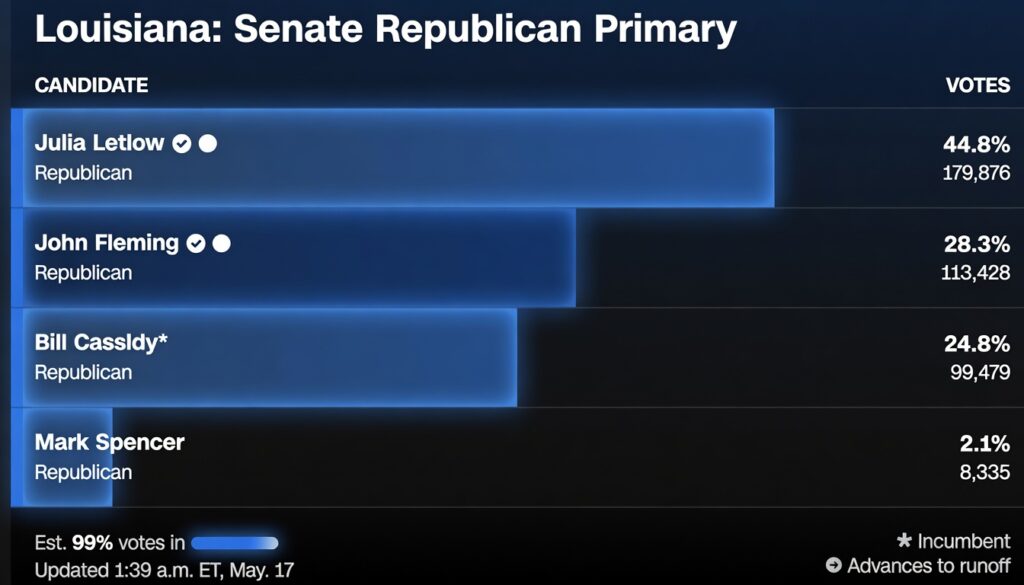
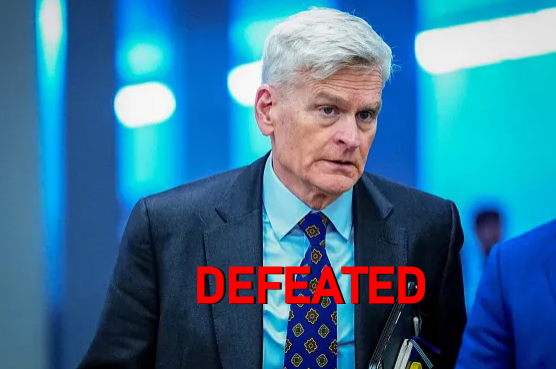
Senator Bill Cassidy’s political career ended Saturday night the way many predicted it would, not with a general election defeat, but with a primary knife in the back from within his own party. The 11-term Louisiana Republican, who first took his Senate seat in 2015, was eliminated from advancing in the state’s Republican primary, becoming the first incumbent Republican senator to lose his party’s nomination since Senator Richard Lugar of Indiana in 2012, a span of 14 years. Rep. Julia Letlow, the Trump-endorsed challenger, finished first with roughly 45% of the vote. State Treasurer John Fleming came in second with approximately 28%. Cassidy limped out with just under 25%, and in doing so officially became the most prominent political casualty of Donald Trump’s long memory.
This Senate seat is one of 33 U.S. Senate seats up for grabs in the 2026 midterm cycle. Senate seats carry six-year terms, and Cassidy’s seat, which he has held since 2015, came up for its regular renewal in 2026 as he sought a third term. The general election is set for November 3, 2026, with a potential runoff on December 12, 2026, if no candidate reaches a majority. Before Saturday’s primary, Louisiana also changed its election structure for the first time in decades: under a 2024 law signed by Governor Jeff Landry, the state ditched its old “jungle primary” system, where all candidates appeared on one ballot regardless of party, in favor of a closed partisan primary system, last used in Louisiana for a Senate race in 2010. That change mattered significantly, as it cut off the unaffiliated voters who had historically been a key Cassidy constituency.
RINOs and their votes to Impeach were never forgotten
Cassidy has long been branded a RINO “Republican In Name Only” by Trump loyalists, and the label stuck. In February 2021, he was one of only seven Republican senators who voted to convict Donald Trump following the second impeachment trial stemming from January 6th. Trump was acquitted, but Cassidy’s vote was never forgiven. In the five years since, despite largely supporting Trump’s second-term agenda and voting to confirm RFK Jr. as HHS Secretary, the wound remained open.
The seven Republicans who crossed the aisle to convict were Senators Richard Burr (NC), Bill Cassidy (LA), Susan Collins (ME), Lisa Murkowski (AK), Mitt Romney (UT), Ben Sasse (NE), and Pat Toomey (PA). Trump’s political revenge has been methodical and nearly total. Burr and Toomey had already announced their retirements before the vote and left the Senate in January 2023 rather than face voters. Sasse resigned mid-term that same month to become president of the University of Florida. Romney, reading the writing on the wall, chose not to seek re-election in 2024 and retired in January 2025. Murkowski was the lone member of the group who actually faced Republican voters after the impeachment vote, surviving a 2022 challenge from Trump-backed Kelly Tshibaka only because Alaska’s ranked-choice voting system allowed Democratic second-choice votes to push her over the finish line. Cassidy became the first of the seven to be outright defeated by his own party’s voters at the ballot box, eliminated Saturday night in Louisiana. That leaves only one of the original seven still standing and still facing political judgment: Susan Collins of Maine, who is running for a sixth Senate term this November in what is widely considered the most competitive Republican Senate seat in the 2026 cycle. Whether Trump’s long shadow finally reaches her in a blue-leaning state will be the last chapter in this story.
Of the seven who voted to convict, five are already gone — retired, resigned, or chose not to run. One survived her voters through the luck of a unique election system. One was just defeated tonight. Collins is the final verdict still pending.
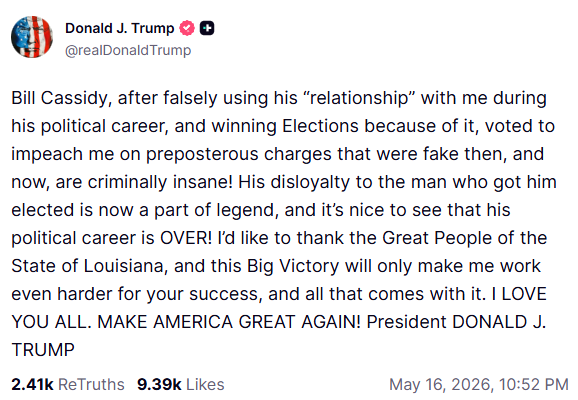
Trump’s Truth Social post on Saturday night captured the spirit of the evening: “Bill Cassidy, after falsely using his ‘relationship’ with me during his political career, and winning Elections because of it, voted to impeach me on preposterous charges… His disloyalty to the man who got him elected is now a part of legend, and it’s nice to see that his political career is OVER!” Cassidy, for his part, gave a measured concession that appeared to take a subtle swipe at the president without mentioning him by name. “When you participate in democracy, sometimes it doesn’t turn out the way you want it to. But you don’t pout, you don’t whine, you don’t claim the election was stolen,” he said.
Trump’s Endorsement: A Tailwind or a Tombstone
Trump’s endorsement of Letlow came before she even formally entered the race in January 2026, and it acted as a political rocket booster in a state that Trump carried by 22 points in 2024. “It’s the most powerful endorsement in the world,” Letlow said on the eve of the primary. She also had the backing of Louisiana’s Republican Governor Jeff Landry, who signed the law changing the primary system, a move Cassidy’s campaign manager called out, accusing Landry of “intentionally meddling” in the election to benefit Letlow. Cassidy’s loss further cements Trump’s grip on the GOP, as yet another Republican who voted to convict him in 2021 will not be returning to Congress.
The Runoff: Letlow vs. Fleming — June 27
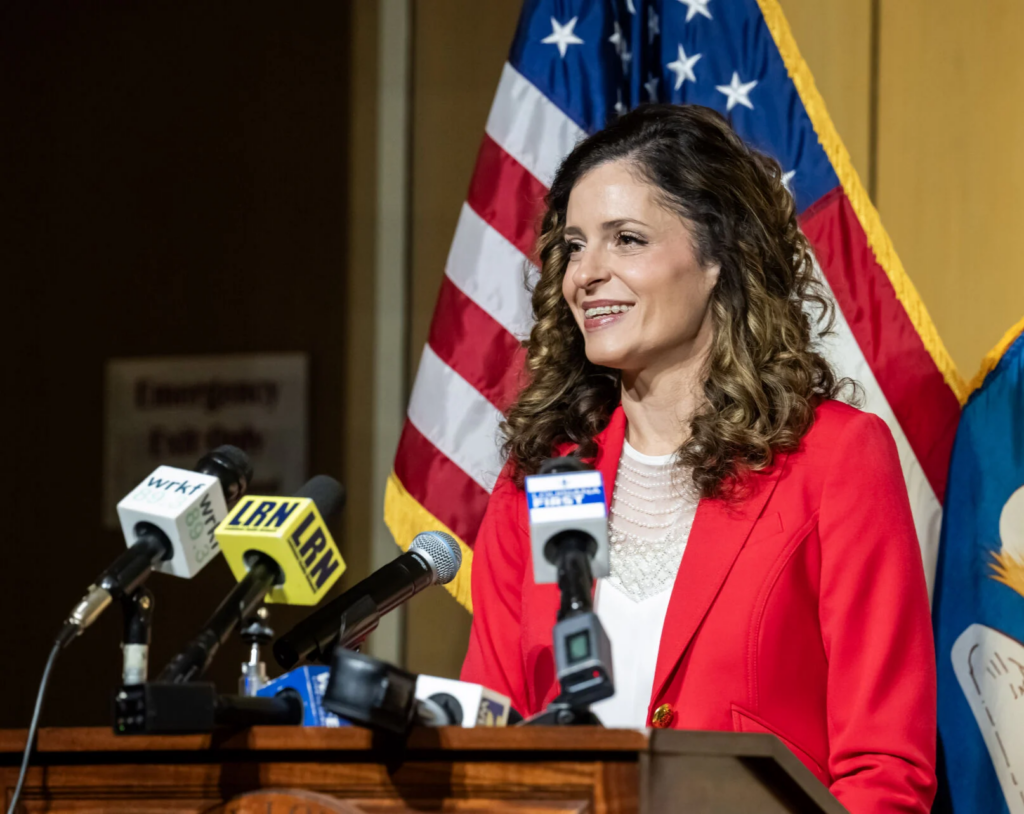
Since no candidate crossed the 50% threshold, Letlow and Fleming advance to a June 27 Republican primary runoff. The question now is what happens to Cassidy’s roughly 25% of the vote.
Cassidy represented the moderate wing of the Louisiana GOP, a constituency that was skeptical of both Trump-aligned candidates. The critical variable is how those voters split. Fleming had attempted to position himself as the more authentically MAGA candidate, pointing to his role in the Trump White House during the first term and his co-founding of the House Freedom Caucus. He labeled Letlow a “Never Trumper” and attacked her for supporting large spending packages in Congress and her past work promoting DEI initiatives at the University of Louisiana Monroe. Letlow fired back, calling Fleming a “Never Trumper” himself and citing his work as a lobbyist before becoming state treasurer.
Based on current vote analysis, Letlow is the heavy favorite heading into the runoff. She led by a 17-point margin over Fleming in the primary despite Fleming also running as a Trump-adjacent candidate. Trump himself has publicly congratulated Letlow, calling her a “spectacular person” and indicating his continued support. Cassidy’s moderate voters, if they turn out at all in the lower-turnout runoff environment, are more likely to split toward Fleming — but not in numbers large enough to close a 17-point gap. Current political analysis by NBC’s Decision Desk and multiple outlets rates Letlow as the clear frontrunner for the Republican nomination.
Letlow vs. Fleming: Key Policy Differences
Both candidates ran as staunch conservatives and Trump supporters, but real differences emerged. Letlow, a former university communications professor and administrator and the first Republican woman ever elected to Congress from Louisiana, centered her campaign on election integrity, border security, anti-DEI legislation, pro-life policy, education reform, and rural broadband access. Her signature legislative push heading into the race was the SAVE America Act, which requires proof of citizenship when registering to vote and photo ID at the ballot box, and she called for invoking a talking filibuster in the Senate to force it through Democratic obstruction. Letlow argued that if Democrats want to block the bill, they should at least be forced to stand on the Senate floor and explain why. She also introduced the FRESH Act (codifying healthier dietary guidelines), the Consumer Price Information Act, and a Parent’s Bill of Rights.
Fleming, a physician and Navy veteran who served in Congress from 2008 to 2017 before working in Trump’s first-term White House, ran to Letlow’s right on spending. He attacked her for supporting large appropriations packages and accused her of being too cozy with the Washington establishment. His most distinctive policy position was fierce opposition to carbon capture and sequestration (CCS) projects in Louisiana, which he argued threaten landowners’ private property rights and are funded by wasteful federal tax incentives. Fleming also leaned on healthcare policy experience and his role helping found the House Freedom Caucus as proof of his hardline conservative credentials.
The General Election and the Odds
Whoever emerges from the June 27 runoff will enter the November 3 general election as an overwhelming favorite. The Democratic primary produced three largely unknown candidates — farmer Jamie Davis, policy analyst Nick Albares, and business owner Gary Crockett — with Gary Crockett and Jamie Davis advancing to a Democratic runoff. Louisiana has not elected a Democrat to the U.S. Senate in well over a decade, and Democrats have not won a U.S. Senate seat in the state since 2002. Trump carried the state by 22 points in 2024. The Republican nominee, almost certainly Letlow, will enter the general election as a prohibitive favorite. Every major election forecaster currently rates this seat as safely Republican.
A Personal Note
This primary outcome is a sharp reminder of how profoundly the Republican Party has been reshaped in Trump’s image. I think the punishment of Cassidy for one vote, even if I disagree with that vote, raises fair questions about whether dissent within a party is still permissible. But politics is what it is.
What I do want to weigh in on is the filibuster debate that Letlow has pushed to the center of this race. I do not agree with abolishing the filibuster, and I think it would be a mistake. The filibuster is one of the few remaining checks and balances in the Senate that prevents extreme legislation from being rammed through by whichever party holds a slim majority at any given moment. It forces both parties to negotiate, compromise, and give concessions to build broader coalitions. Without it, the Senate becomes little different from the House, a pure majority-rule body where 51 votes can reshape the country every few years depending on who wins the last election.
That said, I want to be honest about the complexity here. The modern Democratic Party has made no secret of its appetite for moves that would fundamentally alter the structure of American governance, eliminating the Electoral College, packing the Supreme Court, and yes, abolishing the filibuster themselves when they’ve had the numbers. If Democrats regain a Senate majority and face no filibuster to stop them, they will absolutely use that to their advantage, because Republicans will have already set that precedent. In that light, I understand the argument that removing the filibuster now, specifically to pass the SAVE Act, which I think is good policy and good for America, may be a necessary evil. Requiring proof of citizenship to vote and photo ID at the polls is overwhelmingly supported by the American public, and it is basic common sense.
But the long-term repercussions of eliminating that 60-vote threshold are enormous and largely unpredictable. Once that guardrail is gone, it is gone, and the next time the pendulum swings left, there will be nothing standing between a slim Democratic majority and legislation that would look unrecognizable to half the country. Only time will tell how such a monumental change to the architecture of our Senate will affect American politics for generations to come.