


🔴 UPDATE — May 26, 2026: Ken Paxton has won tonight’s Republican Senate runoff — defeating four-term incumbent John Cornyn by an estimated 20 points with Trump’s endorsement delivering exactly as predicted. The establishment’s $130 million could not save Cornyn from his own record. Paxton now faces Democrat James Talarico in the November 3 general election. For the full results breakdown read our update here → Paxton Defeats Cornyn: Trump’s Endorsement Delivers Again in Texas
🔴 UPDATE — May 19, 2026: In another blow to the Washington establishment, President Trump has officially endorsed Ken Paxton in the May 26 runoff — dealing a potentially fatal blow to John Cornyn’s Senate career. For the full breaking news debrief click here → Trump Endorses Paxton: The Swamp Strikes Out in Texas
ANALYSIS — Published May 18, 2026 · By Roe Baynes · 12 Min Read
⚡ Pressed for time? Get the essential facts in our Quick Read version here → Texas Senate Race 2026: The Rundown
- Jump to a section:
- The Primary Results | John Cornyn | Ken Paxton | The Runoff | The General Election | In My Opinion
In the wake of Louisiana’s seismic political earthquake — where four-term incumbent Senator Bill Cassidy became the first Republican senator defeated in a primary by his own party’s voters in over a decade — the eyes of the nation now turn west to Texas, where an equally consequential and arguably more explosive Republican civil war is still very much underway.
The Primary — March 3, 2026: A Three-Way War Nobody Won
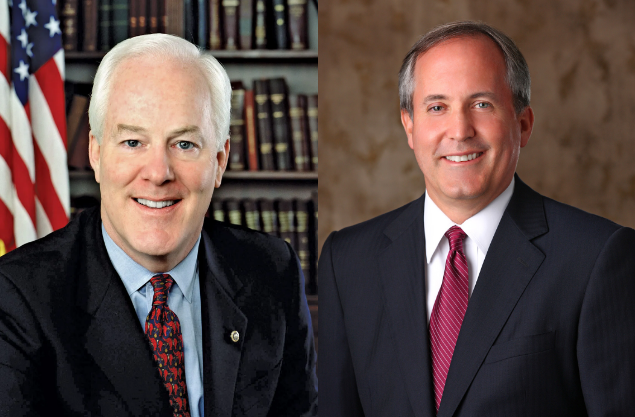
The Republican nominee will be determined in a runoff election between four-term incumbent John Cornyn and state Attorney General Ken Paxton on May 26, 2026, after no candidate secured a majority of the vote in the March 3 primary. With about 90% of precincts reporting on election night, Cornyn had 41.9% of the vote compared with 40.9% for Paxton, with U.S. Rep. Wesley Hunt of Houston finishing third with 13.5% of the vote and has since refused to endorse either candidate, saying he will follow President Trump’s lead. Hunt’s voters, as we will discuss, are likely headed to Paxton.
Texas: Senate Republican Primary
The Texas Senate primary became the most expensive in state history, with spending across both parties reaching nearly $99 million, second only to the 2022 Arizona Senate primary in U.S. history. Cornyn’s side accounted for nearly $59 million of that total. On the Republican side, Cornyn raised $11.2 million to Paxton’s $5.9 million. The establishment outspent the grassroots challenger nearly two-to-one, and still couldn’t close the deal.
John Cornyn: The Swamp’s Last Stand in Texas
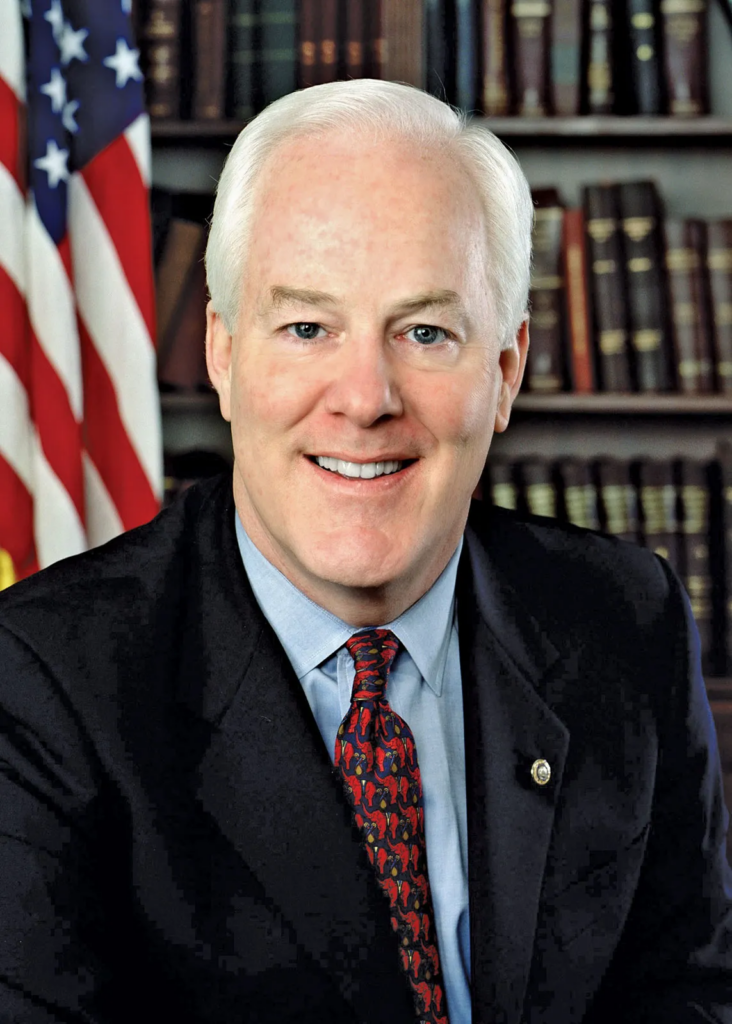
To understand why John Cornyn is in the fight of his political life, you have to understand what he represents, and how the Republican Party has changed around him while he stayed exactly the same.
Cornyn has been in public office for over 40 years. He served as a district judge in San Antonio from 1985 to 1991, as an Associate Justice of the Texas Supreme Court from 1991 to 1997, as Texas Attorney General from 1999 to 2002, and has been a United States Senator since January 2002. He is now seeking a fifth Senate term, meaning if he wins in November, he will have held this single Senate seat for 28 years, and counting. During his tenure, Cornyn chaired the National Republican Senatorial Committee from 2009 to 2013 and served as the Senate Republican Whip from 2013 to 2019. He is, by any measure, a creature of the Washington establishment, and in today’s Republican Party, that is not a compliment.
The Secret Ballot That Said It All
Perhaps no single moment better illustrates Cornyn’s institutional instincts than what happened on November 13, 2024, just eight days after Donald Trump won the presidential election in a landslide. With Mitch McConnell stepping down after 18 years as Senate Republican leader, the question of who would replace him was one of Trump’s first tests of influence over his own party. Trump’s orbit, including Elon Musk and Robert F. Kennedy Jr., backed Rick Scott of Florida, the most Trump-aligned candidate in the race. Trump himself did not formally endorse, but his preference was clear.
Senate Republicans held a secret ballot election to replace McConnell, with Thune, the current Republican whip, running against John Cornyn of Texas and Rick Scott of Florida. The secret ballot format was not accidental, Trump’s ability to anoint his chosen leader was complicated by the secret ballot, which means he won’t know which senators voted against his preferred candidate — or be able to politically punish them. In other words, establishment senators used the secret ballot as a shield against both Trump’s wrath and the political consequences of defying their own voters.
In the first round, Thune received 23 votes, Cornyn 15, and Scott 13, eliminating Scott. In the second round, Thune won 29-24 over Cornyn. The MAGA candidate was the first one eliminated. The establishment won. Cornyn, even in losing the leadership race, was part of the machinery that made it happen.
A Decade of Undermining Trump
Cornyn’s relationship with Donald Trump has been one of public loyalty and private sabotage, and the receipts go back a long way. In February 2016, Cornyn said he was concerned Trump would be an “albatross” for down-ballot races and that Trump was “a controversial figure” who needed to unify rather than divide the party. In October 2020, with Trump’s reelection on the line, Cornyn said Trump “let his guard down,” caused “confusion,” and “got out over his skis” on the coronavirus pandemic, creating a negative national story just weeks before the election. Cornyn also called Trump nemesis Anthony Fauci a “national treasure” on video. Rather than defending Trump during his impeachment, Cornyn called the impeachment vote a “vote of conscience.”
After Trump left office, Cornyn continued to publicly distance himself. In December 2022, he said “I think [Trump] is less relevant all the time. Again, even if you capture all of the Trump voters, you may be able to win a primary but you’re not necessarily going to win a general election.” In May 2023, he said Republicans need someone as an alternative to Trump, that Trump couldn’t win a general election, and that his time had passed. When asked about calling for the GOP to move on from Trump in 2024, Cornyn defended his remarks by saying, “In politics, unless you can win an election you’re pretty much irrelevant… I have concerns about the President’s ability to win in November.” Trump, of course, won in November, by 22 points in Texas alone.
Conservative Review’s Liberty Score grades every member of Congress on their top 50 most significant votes over a rolling six-year window, voting with the conservative position earns a point, voting against earns nothing. It is designed to cut through campaign rhetoric and measure what a politician actually does when it counts. John Cornyn’s Liberty Score is an F at 54% — meaning on the votes that matter most to constitutional conservatives, he sides against them nearly half the time. For a four-term senator seeking a fifth term on the premise that he is Texas’s conservative champion in Washington, that number tells a very different story.
The Legislative Record: Real Wins, Real Betrayals
With more than 80 of his own bills signed into law, Cornyn is routinely ranked among the most effective legislators in the Senate. On the positive side: he authored a key provision of the Laken Riley Act, Trump’s first law of his second term, ensuring detention of violent illegal immigrants. He secured billions in Hurricane Harvey disaster relief for Texas. He passed the Justice for All Act expanding protections for crime victims.
But then there is the gun record, and for Second Amendment advocates in Texas, this is where Cornyn loses them entirely. He was the lead Republican architect of the Bipartisan Safer Communities Act, the most significant gun safety legislation in a generation, which included red flag provisions, enhanced background checks for buyers under 21, and funding for state crisis intervention orders. Combined with his earlier Fix NICS Act, Cornyn has authored two of the most significant expansions of federal gun restrictions in recent memory, all while representing the state with more firearms and looser gun laws than almost anywhere in the country.
It is also worth noting who has been funding Cornyn’s four terms in Washington. Over his Senate career, Cornyn has received millions in contributions from the defense industry, pharmaceutical companies, and financial sector PACs, the very special interest groups that critics argue have shaped his dealmaking instincts far more than the constituents back home in Texas. His top donor sectors over his career include defense contractors, big pharma, and Wall Street, a donor profile that looks far more like a Washington institution than a Texas conservative.
The Age and Tenure Question
Americans across party lines are increasingly fed up with career politicians who have made Washington their permanent home. Cornyn is 74 years old. If re-elected he will be 80 when his fifth term ends. Support for congressional term limits has never been higher. Cornyn, in public office continuously since 1985, is the face of exactly what that movement is reacting against. He is a masterful dealmaker by Washington standards, but he has consistently delivered more for the establishment and its special interests than for the everyday conservative Texas voter who sent him there. And in 2026, those voters are finally saying enough is enough.
Ken Paxton: The MAGA Choice With Serious Baggage

Paxton entered the race in April 2025 on Fox News and immediately scrambled the field. He is everything Cornyn is not, combative, uncompromising, and fully aligned with the MAGA base. He has also spent nearly his entire tenure as Attorney General under the cloud of serious legal and ethical trouble.
Why Conservatives Are Rallying to Paxton
Paxton’s appeal is straightforward. As AG he led relentless legal battles against Biden administration overreach, open borders, vaccine mandates, transgender policies for minors. He challenged the 2020 election results in court. And after finishing second in the March primary, rather than accepting a graceful exit the establishment hoped for, Paxton refused to withdraw unless the Senate eliminated the filibuster to pass the SAVE Act — drawing a hard line where Cornyn had conveniently reversed his long-standing filibuster defense the moment Trump’s endorsement was dangled in front of him. That contrast resonates deeply with primary voters.
The Baggage
Just months after taking office in 2014, a state grand jury indicted Paxton on securities fraud charges for allegedly duping investors while failing to disclose he was being paid by the company whose shares he was selling. That case never went to trial. Then in 2023, the Republican-led Texas House voted 121-23 to impeach Paxton on charges of abuse of power, bribery, and obstruction of justice — accusing him of misusing his office to benefit a political donor under FBI investigation. He was acquitted by the Texas Senate, with Trump publicly intervening on his behalf. His wife filed for divorce on “biblical grounds” during the proceedings.
Paxton calls it all a political witch hunt. But 24% of Cornyn voters say they would likely vote for Democrat James Talarico in November if Paxton is the nominee, a number that should keep every Texas Republican up at night.
The Runoff: May 26 — Paxton the Favorite
Texas Public Opinion Research shows Paxton leading 48%-40% with 11% undecided. Critically, the poll found that even a Trump endorsement of Cornyn would not close the gap, but a Trump endorsement of Paxton would push his lead to 55%-35%. The University of Houston poll found Hunt’s voters breaking toward Paxton by a 19-point margin. Those are not Cornyn voters, they never were.
Trump has stayed silent on the endorsement, and the reason is simple: he does not want to attach his name to a losing candidate. A Trump-endorsed loser enters the general election wounded, without the president’s full backing in what is shaping up to be a genuinely competitive race. So Trump watches and Paxton continues to lead.
Current polling and the trajectory of Hunt’s voters both point to Paxton as the runoff favorite heading into May 26.
The General Election: Enter James Talarico

Whoever emerges from May 26 will face Democratic state Rep. James Talarico and if you are a Texas Republican who hasn’t been paying attention to this man, it is time to start.
Talarico, 36, won his party’s primary by defeating the higher-profile Congresswoman Jasmine Crockett. He is articulate, polished, and deliberately hard to pigeonhole, a gifted communicator frequently compared to a young Barack Obama, a comparison he has done nothing to discourage given Obama’s mentorship and support.
His central argument to Republicans is disarmingly simple: both of your candidates are corrupt, compromised, or captured by Washington. I am none of those things. It is a pitch specifically designed to exploit the fractures this brutal Republican primary has opened, and the polling suggests it is working.
Democrats currently have a 47% chance of winning the seat according to Polymarket, compared to 55% for Republicans, up from just 30% in early March. Texas Public Opinion Research found Talarico leading Cornyn 44%-41% and Paxton 46%-41%. Among independents he leads both Republicans by over 20 points.
The Cook Political Report still rates the seat as Likely Republican and that matters. Cook’s track record is strong, and they are not moving this to Toss-Up lightly. The structural fundamentals of Texas still favor Republicans: Trump carried the state by 14 points in 2024, and no Democrat has won a statewide race in Texas since 1994. History and geography still lean red. But prediction markets are pricing a Paxton victory in the Republican primary at 35%, Talarico beating Paxton at 32%, and Cornyn defeating Talarico at 24% numbers that should alarm every Republican strategist in the country.
In My Opinion
I am not particularly fond of Ken Paxton. His legal baggage is real, his impeachment was conducted by his own party’s legislature, and a decade-old securities fraud indictment is not a good look for a United States Senate candidate. He is not my ideal candidate. But we do not live in an ideal world, we live in the world of American politics in 2026, where far too often the choice comes down to the lesser of two evils.
On that front, Paxton is an improvement over Cornyn. I am exhausted by the Washington establishment, career politicians who spend decades in office building relationships with pharmaceutical lobbyists and the military-industrial complex, delivering press releases to constituents while doing the real work for their donors behind closed doors. Cornyn is the embodiment of that system. A change, even an imperfect one, is better than six more years of more of the same.
That said, I am deeply concerned about James Talarico. He is a gifted communicator who says exactly what his audience wants to hear — and politicians who are that good at tailoring their message have a habit of not keeping their promises once Washington gets hold of them. But what concerns me most is his use of Scripture. Talarico regularly invokes biblical language to justify positions on illegal immigration and abortion, I find that deeply manipulative and dishonest. The claim that the Bible affirms a woman’s right to choose is, in my view, preposterous. One of Christ’s most fundamental teachings is the protection of the innocent. Abortion as it exists today was not remotely a practice that existed in the biblical world, but the sanctity of innocent life is woven throughout Scripture from beginning to end, and that principle is not uniquely Christian. It sits at the core of virtually every major religious tradition worldwide. Using the Bible as a political prop to justify positions that contradict its most basic principles tells me a great deal about who Talarico is as a politician.
So here is where I land: I prefer Paxton over Cornyn, but I would take Cornyn over Talarico in a heartbeat. The lesser of two evils argument keeps rearing its ugly head in American politics, and I am as tired of it as you are.
This race matters far beyond Texas. A Paxton win removes another establishment RINO from power and signals that Trump’s agenda continues to have momentum heading into the back half of the midterms. A Talarico win, handing Democrats their first Texas Senate seat in over 30 years, would be a five-alarm warning that nominating a baggage-laden candidate in a suddenly competitive state has real consequences. And I continue to have reservations about the filibuster discussion that Paxton has put at the center of this race, for reasons I laid out in our Cassidy piece. The long-term repercussions of eliminating that 60-vote threshold will outlast this race, this Congress, and this presidency.
This Texas Senate race is a bellwether. Watch it closely. It will tell us a lot about where our Country is headed.
This article is also available as a Quick Read → Texas Senate Race 2026: The Rundown